Dogs chew shoes because chewing is normal dog behavior, and shoes are chewy, within reach and smell like their favorite person. Puppies also chew to ease teething. To stop it, put shoes away, give your dog safe things to chew, and trade the shoe for a toy when you catch them. Don't punish after the fact. If your dog only chews when left alone, or starts chewing suddenly as an adult, talk to your vet.
Find the reason, then the fix
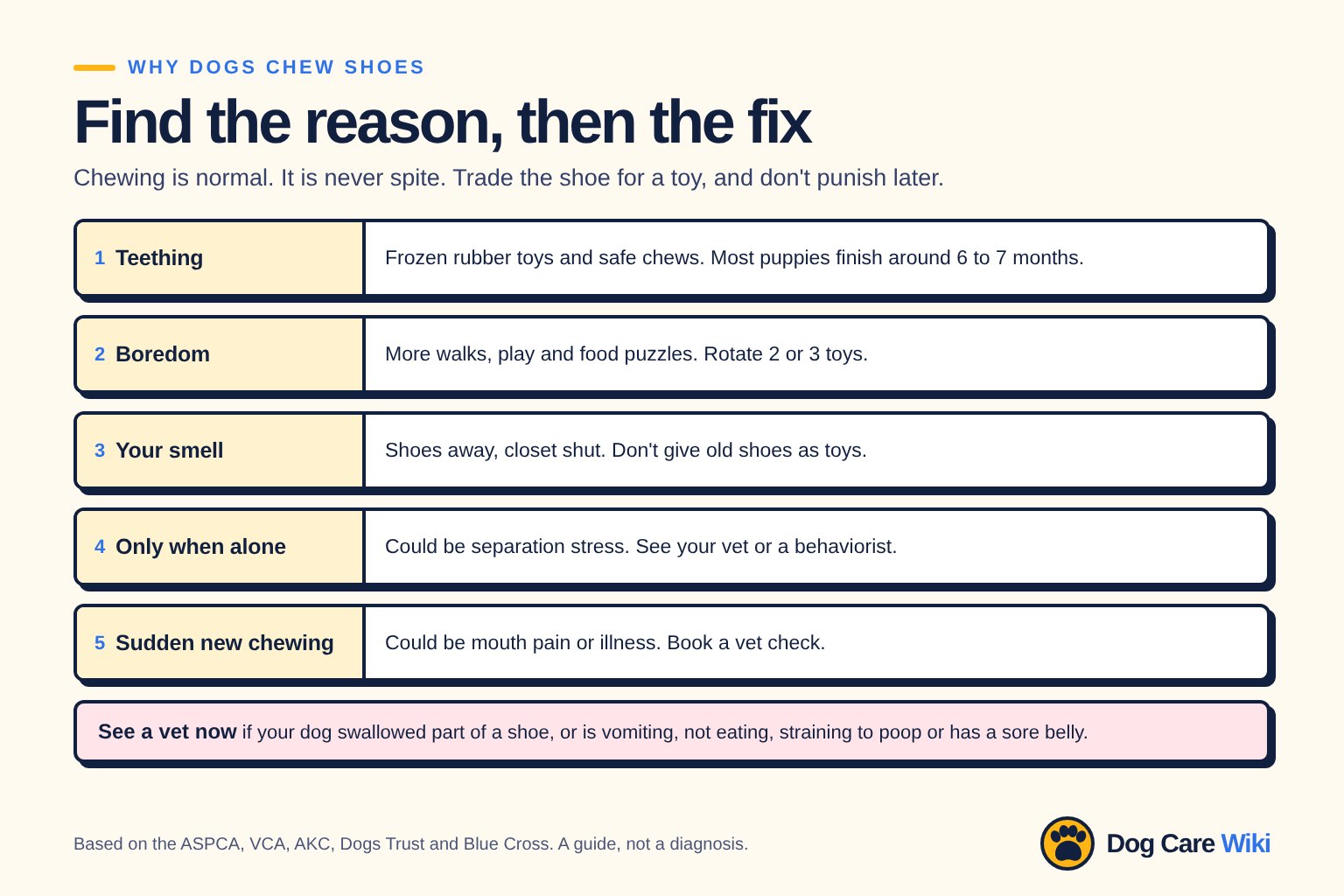
- Teething: safe chews and frozen rubber toys
- Boredom: exercise, play and food puzzles
- Your smell: shoes away, no old shoes as toys
- Alone only or sudden change: see your vet
The quick guide
Teething
Puppies chew to ease sore gums. Sources give slightly different ages: VCA says 3 to 6 months, Blue Cross says 3 to 7 months. Dogs Trust notes some dogs have a second chewing phase around their first birthday.
Boredom or not enough exercise
A dog with energy to spare and nothing to do will find something to do. Shoes are often first in line.
Your smell
Shoes carry your scent. The AKC notes that when something smells like you, it can be irresistible.
Attention
Grabbing a shoe can start a chase or get a reaction. VCA notes that even negative attention can reward the chewing.
Stress when left alone
The ASPCA says dogs who chew because of separation anxiety usually chew only, or most, when left alone.
Hunger
Dogs on a strict diet may chew while looking for food. The ASPCA lists this as a cause to rule out.
Pain or illness
The AKC says heavy chewing can sometimes be a sign of pain in the mouth, teeth or gums. New chewing in an adult dog is worth a vet check.
What to do starting today
- Put shoes in a closet or on a high shelf, and close doors to rooms you can't watch.
- Give your dog two or three safe chew toys, and swap them every few days so they stay interesting.
- When you catch your dog with a shoe, trade it for a chew toy or a treat. Praise them when they chew the toy.
- Don't punish after the fact. VCA says punishing a pet for something already done only increases their anxiety.
- Add a walk, a play session or a food puzzle each day.
- Don't give old shoes as toys. The ASPCA points out a dog can't tell an old shoe from a new one.
Watch: managing teething and chewing
A short video from the Penn Vet Working Dog Center at the University of Pennsylvania on redirecting a puppy from things it shouldn't chew.
Choosing safer chews
Blue Cross says a good chew should not splinter or break into small pieces that can be swallowed. Durable rubber toys that you can stuff with food are a common choice across expert sources.
Always supervise a new chew until you know how your dog handles it, and take it away once it gets small enough to swallow.
Where the experts disagree
Not every trusted source says the same thing. These are the main differences, so you can decide with your vet.
- Rawhide. Blue Cross lists dental rawhide among suitable chews. The Penn Vet Working Dog Center says not to give rawhide to puppies because pieces can get stuck. The AKC says it depends on the dog, and to always supervise.
- Bones. Some shelter and training guides suggest marrow or knuckle bones. The PDSA advises avoiding bones because they can break teeth and cause choking.
- Crates. Many sources recommend a crate or pen when you can't watch your dog. VCA warns that a dog who feels insecure when shut in may chew more trying to get out. That matters most for dogs who are stressed when alone.
- Bitter-tasting sprays. Many trainers and shelter guides suggest them. Blue Cross says they only put off some dogs and don't cure a chewing problem.
Tips owners and trainers share
These ideas are widely shared by experienced owners and trainers. They are not vet advice, and they don't suit every dog, so use them with care and watch your dog closely.
- A frozen wet washcloth for teething puppies. The ASPCA mentions that some people recommend it. Supervise closely, because cloth can be torn and swallowed. A frozen rubber toy is a safer swap.
- A frozen stuffed rubber toy or meals in a food puzzle. Popular with trainers, and in line with VCA and Blue Cross advice on keeping dogs busy.
- Toy rotation. Putting toys away and bringing them back keeps them new. The AKC suggests having two or three out at a time.
- Trade games. Trainers teach dogs to swap an item for a treat so you never need to snatch. Snatching can teach some dogs to guard. See our resource guarding guide.
If your dog only chews when left alone
Chewing at doors, windows or your belongings only when you're out can be a sign of separation-related stress. The ASPCA says dogs who chew because of separation anxiety usually chew only, or most, when left alone. Dogs Trust says it's important to see your vet, who can refer you to a qualified behaviorist.
Puppies who chew everything
Mouthing and chewing go together in young puppies. Keep shoes out of reach, offer plenty of safe chews, and redirect calmly. Our guides on how to stop puppy biting and when puppy biting stops use the same calm approach.
Common questions
Why does my dog chew my shoes and not theirs?
Your shoes smell like you, and they are chewy and easy to reach. Put them away and give your dog their own safe chews.
Is my dog chewing out of spite?
No. Blue Cross is clear that chewing is never done out of spite or jealousy. It usually comes from teething, boredom, stress or habit.
Should I scold my dog when I find a chewed shoe?
No. Your dog won't link the scolding to something they did earlier. VCA says it only increases anxiety. Put shoes away and focus on prevention.
Can I give my dog an old shoe to chew?
It's best not to. The ASPCA points out that dogs can't tell the difference between an old shoe and a new one.
When will my puppy stop chewing everything?
Teething usually ends around 6 to 7 months. Some dogs have a second chewing phase near their first birthday. Most dogs keep enjoying safe chews for life.
My dog swallowed part of a shoe. What should I do?
Call your vet now, even if your dog seems fine. Watch for vomiting, not eating, straining to poop, or a sore belly.
Veterinary sources
- ASPCA: Destructive Chewing ↗
- VCA Animal Hospitals: Destructive Chewing ↗
- VCA Animal Hospitals: Foreign Bodies in Dogs ↗
- American Kennel Club: How to Stop a Dog From Chewing ↗
- American Kennel Club: Are Rawhide Chews Dangerous for Dogs? ↗
- Dogs Trust: Destructive behaviour ↗
- Blue Cross: Chewing and how to control it (leaflet) ↗
- PDSA: Why do dogs eat everything? ↗
Medical note: This guide is educational and cannot diagnose your dog. A veterinarian who can examine your dog is the right person to give medical advice.