Resource guarding is when a dog stiffens, growls, snaps or bites to keep something to themselves. That can be food, a chew, a toy, a stolen sock, a bed or even a person. It is normal dog behavior and it is not dominance. Most dogs show small warning signs first. Give space, trade instead of taking, and never punish a growl. If your dog has bitten, or children live in or visit your home, get professional help.
The warning ladder
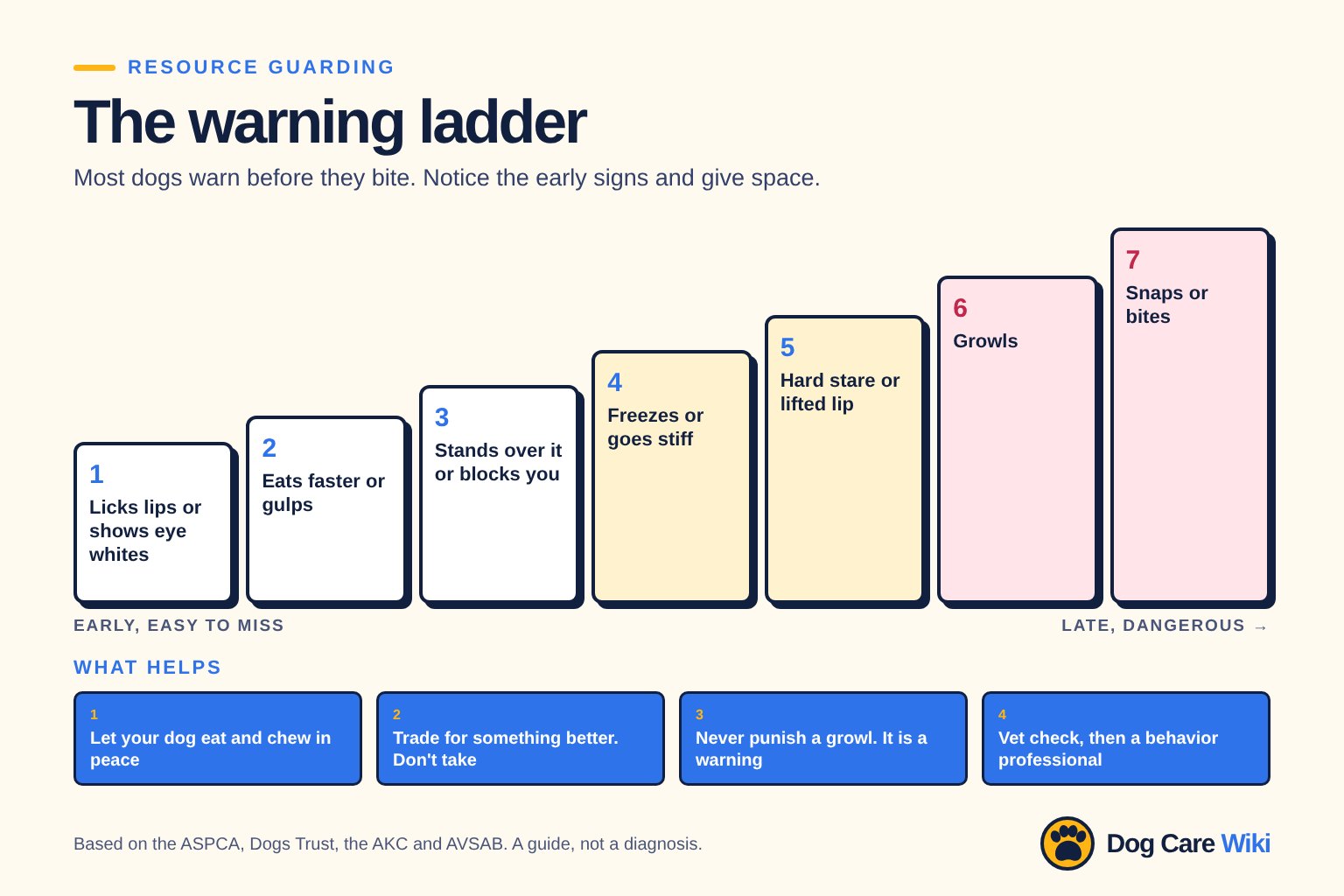
- Early: lip licking, eye whites, eating faster
- Middle: standing over it, freezing, a hard stare
- Late: growling, snapping or biting
- What helps: space, trades, no punishment, a vet check
The quick guide
Licking lips or showing eye whites
Your dog licks their lips, turns their head away, or shows the whites of their eyes while watching you. These are early, quiet signs of worry.
Eating faster or gulping
Your dog speeds up when you come near the bowl, or swallows a chew or a stolen item fast so you can't have it.
Standing over it or blocking you
Your dog lowers their head or body over the item, or moves to put their body between you and it.
Freezing or going stiff
Your dog stops moving and goes rigid. In one shelter study, freezing was the most common sign seen in dogs who guarded food.
A hard stare or a lifted lip
Your dog stares straight at you, or lifts a lip to show teeth.
Growling
A growl is a clear warning. It tells you your dog is uncomfortable. That is useful information, not rudeness.
Snapping or biting
If the earlier signs were missed or punished, a dog may snap, lunge or bite. Stop any training and get professional help.
What to do starting today
- Let your dog eat and chew in peace, in a quiet spot. Use a closed door or a baby gate if people or other dogs pass by.
- Don't reach for, grab or take what your dog is guarding. If you need something back, trade it for something better, like a tasty treat tossed a few steps away.
- Never punish a growl. If a dog learns that growling gets them in trouble, they may skip the warning and bite.
- Pick up the chews, bones and toys your dog guards most when you can't supervise.
- Keep children away from your dog while your dog is eating or has a chew or toy.
- Book a vet check, then ask your vet about a behavior professional.
Why dogs guard things
Dogs evolved to protect food and other useful things. The ASPCA calls guarding possessions "normal behavior for dogs." Dogs Trust describes it as an instinctive, often fear-based response, not dominance or spite. The main reason is a fear of losing something valuable.
Pain or feeling unwell can make guarding start or get worse. That is why a vet check comes first, especially if an adult dog suddenly starts guarding.
It is fairly common. In a study of 1,051 dogs at one US shelter, about 15% showed resource guarding, and most cases were mild or moderate.
Watch: advice from Dogs Trust
A short video from Dogs Trust, the UK dog welfare charity, on why dogs guard and what helps.
What not to do
- Don't take the bowl away to show who's boss. Research on pet dogs linked regularly removing the food bowl with more guarding, not less.
- Don't punish, scold or use force. The American Veterinary Society of Animal Behavior warns that punishment can make guarding worse. It names the "alpha roll" and staring a dog down as methods that often lead to aggression.
- Don't punish a growl. The growl may stop, but the fear does not. The RSPCA warns that a dog may then hide their feelings until they can't hold them in.
- Don't chase your dog for a stolen item. The ASPCA advises never trying to take away stolen or scavenged food. Trade for it instead.
How to help your dog relax at mealtimes
The goal is to teach your dog that a person coming near the bowl means something good is about to arrive. This is a short version of the ASPCA's plan. Only adults should do it, and only if your dog has not bitten.
- Put down your dog's usual meal. Stand a few steps away, past the point where your dog stiffens. Toss a better treat, like a small piece of chicken, toward the bowl. Walk away.
- Repeat at every meal until your dog eats in a relaxed way for 10 meals in a row.
- Then move a little closer before you toss. Again, wait for 10 relaxed meals before getting closer.
- Keep moving as you toss. Don't stand over your dog or stare.
Stop and call a professional if your dog stiffens, stops eating, or seems stressed. Later steps, like touching or lifting the bowl, are best done with a trainer or behaviorist guiding you.
Trade, don't take
When your dog has something you need back, offer something of similar or better value. Toss a treat a few steps away. When your dog goes for it, calmly pick up the item.
The Merck Veterinary Manual notes that dogs can be trained to give and drop items on cue. Practice with low-value toys when your dog is relaxed, and always pay well. If your dog already guards hard, Dogs Trust advises teaching these cues with a professional's support.
If your dog guards from other dogs
Many dogs guard from other dogs even if they never guard from people. Feed each dog in a separate room or crate. Give chews and bones apart, and pick them up when the dogs are together.
Resource guarding and children
Children are bitten more often because they miss the early warning signs. The ASPCA calls a home with children and a guarding dog unacceptably risky, and says no one under 18 should do the training exercises.
- Teach children never to approach a dog who is eating or has a chew or toy.
- Use gates or closed doors at mealtimes and chew times.
- Supervise every time children and your dog are together.
- Get professional help now, not later.
Will my puppy grow out of it?
Dogs Trust says resource guarding isn't something dogs grow out of. Puppies often learn it from competing with littermates for food. Start early: hand-feed some meals, drop treats into the bowl as you walk past, and trade for toys instead of taking them.
Related: how to stop puppy biting without punishment uses the same reward-based approach.
Who can help
- Your vet. To rule out pain or illness, and to refer you on.
- A veterinary behaviorist. A vet with extra training in behavior. VCA calls guarding a serious problem that needs one.
- A certified animal behaviorist or trainer. Ask whether they have experience with aggression and use reward-based methods. A general trainer certificate does not guarantee aggression experience.
If you're in the Philippines, ask your vet who they recommend locally.
Common questions
What is resource guarding in dogs?
It is when a dog uses warning signs, threats or biting to keep food, toys, chews, a resting spot or a person to themselves. It is normal dog behavior, but it can be dangerous and should be managed.
Should I take my dog's food away to show who's boss?
No. Regularly taking the bowl away has been linked to more guarding, not less. Teach your dog that people near the bowl bring good things instead.
My dog growled at me over a bone. Should I tell them off?
No. The growl is a warning. Punishing it can teach your dog to skip the warning and bite. Give space, then work on trades and get help if it keeps happening.
Is resource guarding a sign of dominance?
No. Animal behavior experts describe it as a natural, often fear-based response to losing something valuable, not a bid for status.
Will my puppy grow out of resource guarding?
Usually not on its own. Start early with hand-feeding, tossing treats into the bowl as you pass, and trading for toys.
Can a dog who guards food be safe with children?
It needs careful management and professional help. Keep children away from your dog during meals and chew time, use gates, and supervise every time they are together.
Veterinary sources
- ASPCA: Food Guarding ↗
- Dogs Trust: Resource guarding of food and toys ↗
- American Kennel Club: Resource Guarding in Dogs ↗
- American Veterinary Society of Animal Behavior: Position Statement on Dominance ↗
- Merck Veterinary Manual: Behavior Problems of Dogs ↗
- VCA Animal Hospitals: Possessive Aggression in Dogs ↗
- RSPCA: Aggression in dogs ↗
- McGuire (2019), Characteristics and Adoption Success of Shelter Dogs Assessed as Resource Guarders, Animals ↗
Medical note: This guide is educational and cannot diagnose your dog. A veterinarian who can examine your dog is the right person to give medical advice.