Many puppies become much less mouthy between 4 and 6 months of age, as teething ends and they mature. Adult teeth are usually all in by about 6 to 7 months. Biting rarely fades on its own, though. Calm, steady training helps it fade.
The puppy biting timeline
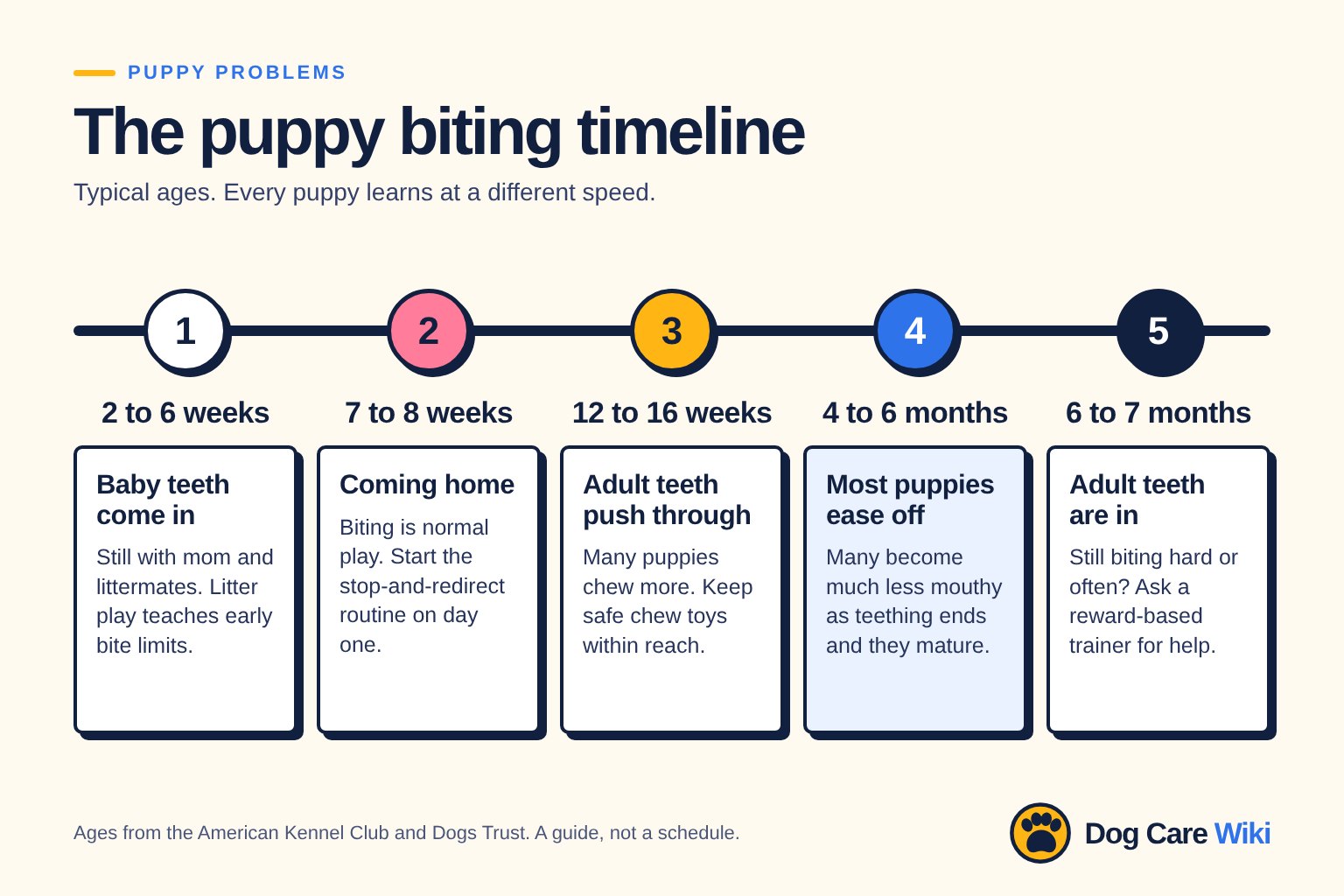
- 2 to 6 weeks: baby teeth come in
- 7 to 8 weeks: coming home
- 12 to 16 weeks: adult teeth push through
- 4 to 6 months: most puppies ease off
- 6 to 7 months: adult teeth are in
The quick guide
Weeks 2 to 6: baby teeth come in
Your puppy is still with their mother and littermates. Play with the litter is where puppies first learn that biting too hard ends the fun.
Weeks 7 to 8 and up: coming home
Biting at this age is normal play. Start the stop-and-redirect routine on day one.
Weeks 12 to 16: adult teeth start to come in
Baby teeth start to fall out and adult teeth push through. Many puppies want to chew more during this stage. Keep safe chew toys within reach and expect a few rough days.
Months 4 to 6: most puppies ease off
As teething finishes and puppies mature, many become much less mouthy.
Around 6 to 7 months: adult teeth are in
By now teething is mostly done. If your puppy is still biting hard or often, teething is unlikely to be the main reason. This is a good time to get help from a trainer.
How to help it stop sooner
- End the game when teeth touch skin. Go still, then calmly step away if it continues.
- Keep a chew or tug toy within reach and offer it instead of your hands.
- Protect nap time. Overtired puppies are often mouthier.
- Make sure everyone at home follows the same rules. Full steps are in our guide How to Stop Puppy Biting Without Punishment.
Common questions
Do puppies grow out of biting on their own?
Not usually. Teething-related chewing eases as adult teeth come in, but puppies still need to learn that teeth on skin ends the fun. Steady, calm practice helps it fade.
At what age do puppies stop biting?
There is no fixed age. Many puppies become much less mouthy between 4 and 6 months. Teething usually finishes by about 6 to 7 months. Every puppy learns at a different speed.
Why is my puppy biting more than last week?
Common reasons include teething, being overtired, or getting too excited during play. If biting starts suddenly or keeps getting worse, check with your vet.
My puppy is 6 months old and still bites hard. What now?
Talk to a certified reward-based trainer or an animal behavior specialist. Teething is mostly done by this age, so a professional can help you work out what is driving the biting and how to change it.
Veterinary sources
- American Kennel Club: A Timeline of Puppy Teething ↗
- American Kennel Club: How to Stop Puppy Mouthing and Teach Better Bite Habits ↗
- American Kennel Club: How to Stop Puppy Biting and Train Bite Inhibition ↗
- Dogs Trust: Mouthing, nipping and puppy biting ↗
- VCA Animal Hospitals: Play Biting in Puppies ↗
- ASPCA: Mouthing, Nipping and Biting in Puppies ↗
Medical note: This guide is educational and cannot diagnose your dog. A veterinarian who can examine your dog is the right person to give medical advice.