To switch dog food, mix a little of the new food into the old food and add more every couple of days. Most dogs can move to the new food over about 7 days. Some soft poop can happen. If it does, go back to the last mix that worked and slow down. Call your vet if vomiting or diarrhea lasts more than 24 hours, if you see blood or black poop, or if your dog stops eating.
The 7-day food switch
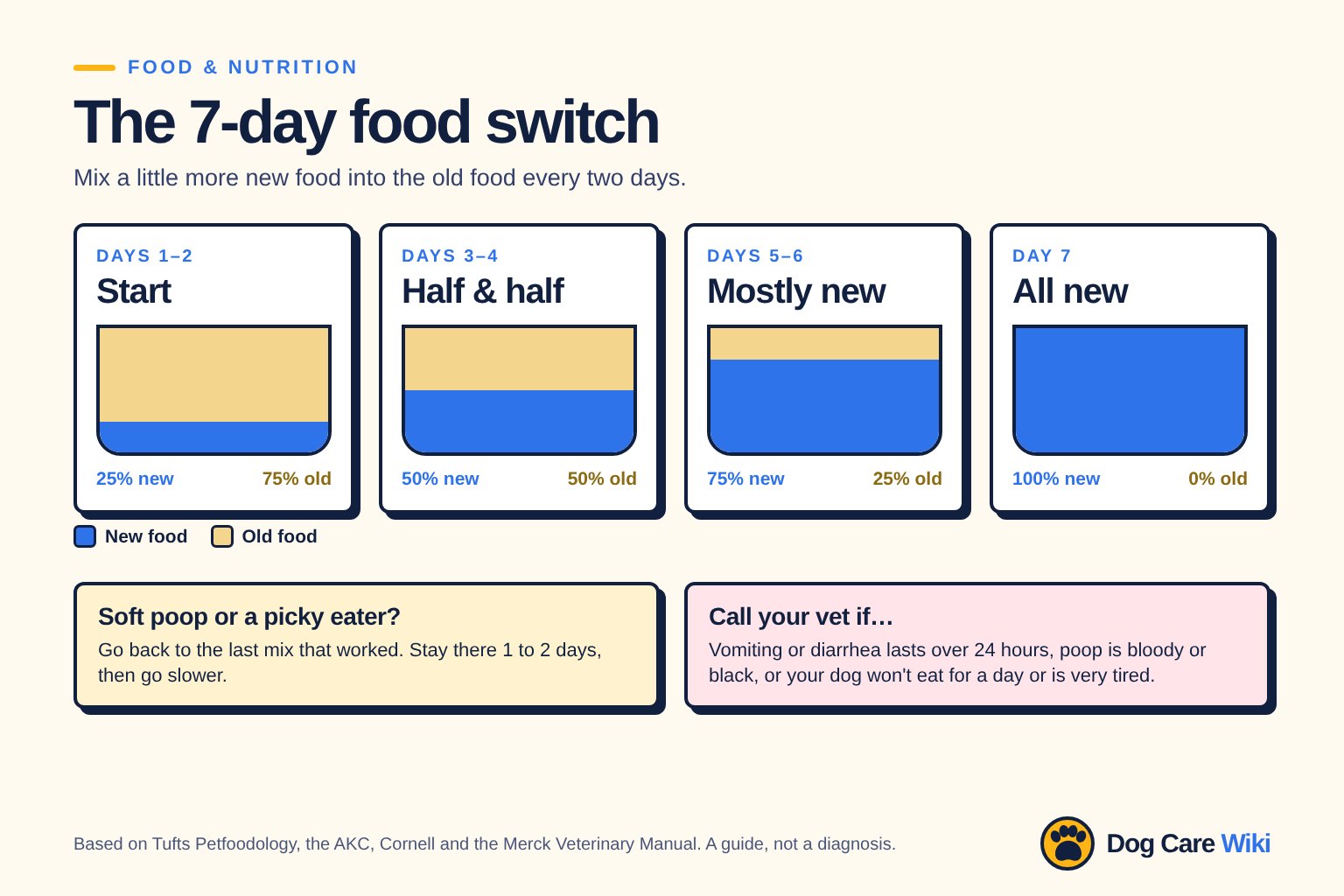
- Days 1–2: 25% new, 75% old
- Days 3–4: half and half
- Days 5–6: 75% new, 25% old
- Day 7: all new food
The quick guide
Days 1 and 2: a quarter new
Mix about 25% new food with 75% of the old food. Watch your dog's appetite and poop.
Days 3 and 4: half and half
Mix equal amounts of old and new food.
Days 5 and 6: mostly new
Mix about 75% new food with 25% old food.
Day 7: all new food
Feed only the new food if your dog has been eating well with normal poop.
Measure by the new food's label
Foods have different calories, so the same cup can mean more or less food. Use the new bag's feeding guide for your dog's weight.
Keep treats small
Vet nutritionists at Tufts recommend that no more than 10% of your dog's calories come from treats and extras.
Watch the poop
A little softer poop can happen during a switch. Watery diarrhea, blood or black poop is a reason to call your vet.
If your dog's stomach gets upset
- Go back to the last mix that didn't cause problems.
- Stay at that mix for 1 to 2 days until the poop is normal again.
- Then move forward more slowly, taking a week or two to finish.
- If the upset is more than mild, go back to the old food until the poop firms up, then start again more slowly.
- Don't add new treats or table food during the switch, so you can tell what caused any upset.
- Make sure fresh water is always available.
Watch: a vet explains the switch
Dr. Greg from PetSmart Veterinary Services walks through when to change food and the 7 to 10 day switch.
How long should the switch take?
About a week works for most healthy adult dogs. Sources vary a little. The AKC suggests 5 to 7 days. Tufts vet nutritionists suggest at least one week, and VCA suggests 7 to 14 days when moving from puppy to adult food.
Take longer if your dog has a sensitive stomach, food allergies, or a history of gut problems. There is no prize for finishing fast.
Feed by the new food, not the old scoop
Two foods can have very different calories per cup. If you keep using the old scoop size, your dog may gain or lose weight. Check the new bag's feeding guide, and a kitchen scale in grams is more accurate than a cup.
The WSAVA notes that calorie information is only required on pet food labels in the US. If your dog's food doesn't list calories, you can ask the company.
If you have to switch suddenly
Sometimes a food is recalled or sold out. The AKC suggests picking a new food that is as close as possible to the old one in its main protein, fiber and fat, and feeding smaller meals for a few days.
Some soft poop is common after a sudden change and usually settles. A PDSA leaflet says most dogs recover within 1 to 3 days. Watch for the warning signs above.
If your vet prescribes a new diet, follow your vet's plan for how to switch.
Switching from puppy to adult food
VCA says veterinary nutritionists recommend switching at 1 year old or when your dog reaches adult size, whichever comes later. Small dogs grow up faster. Large and giant breeds can take 12 to 24 months. Ask your vet when your puppy is ready, then use the same gradual plan.
Switching because of itching or tummy trouble?
Changing foods on your own is not a reliable way to find a food allergy. Tufts vet nutritionists say a proper food trial lasts at least 8 to 12 weeks for skin problems and 3 to 4 weeks for gut problems, using a veterinary diet. Many store-bought "limited ingredient" foods contain more ingredients than their names suggest.
If your dog is vomiting or has diarrhea, see why dogs throw up and what dog poop colors can mean, and talk to your vet before you change food.
How to choose the new food
Look for a label that says the food is "complete and balanced" for your dog's life stage. The WSAVA, a global group of small animal vets, suggests asking the company:
- Do you employ a qualified pet nutritionist?
- Who formulates your diets?
- What quality control do you use?
- Do you publish your research?
If a company can't answer, be cautious.
Common questions
How long does it take to switch dog food?
About 7 days for most healthy adult dogs. Dogs with sensitive stomachs may need two weeks or longer.
Can I switch dog food without mixing?
Some dogs cope with a sudden switch, but many get soft poop or diarrhea. A gradual switch is safer unless your vet tells you otherwise.
Why does my dog have diarrhea after switching food?
The gut needs time to adjust to new ingredients. Mild soft poop often settles in 1 to 3 days. Call your vet if it lasts more than 24 hours, is watery or bloody, or your dog seems unwell.
Should I go back to the old food?
If the upset is more than mild, yes. Feed the old food until the poop is normal, then restart the switch more slowly.
How much of the new food should I feed?
Use the new food's feeding guide, not your old scoop size. Foods have different calories per cup.
Can switching foods tell me if my dog has a food allergy?
Not reliably. A proper food trial uses a veterinary diet for weeks to months and should be planned with your vet.
Veterinary sources
- Tufts Petfoodology: How do I switch my pet's food? ↗
- Tufts Petfoodology: Top five nutrition mistakes pet owners make ↗
- Tufts Petfoodology: Mistakes in elimination diet trials ↗
- American Kennel Club: The right way to switch dog foods ↗
- American Kennel Club: How to safely change your puppy's food ↗
- Cornell Riney Canine Health Center: Diarrhea, worry or wait? ↗
- Merck Veterinary Manual: When to see a veterinarian ↗
- VCA Animal Hospitals: Switching your pet to adult food ↗
- WSAVA: Selecting a pet food for your pet (2021) ↗
- PDSA: Dog's diarrhoea after a change in food (leaflet) ↗
Medical note: This guide is educational and cannot diagnose your dog. A veterinarian who can examine your dog is the right person to give medical advice.